Red Thread Hannover: Discover 36 Landmarks on Foot
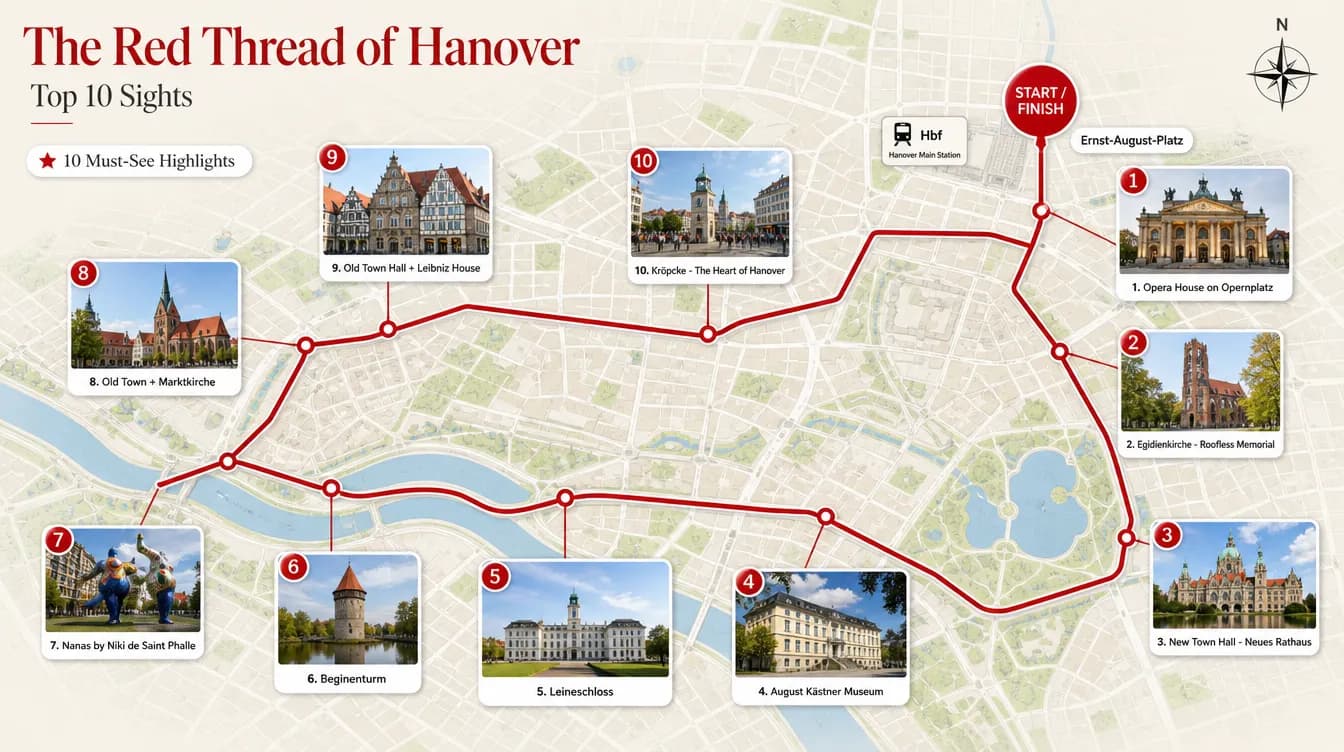
- Length
- 4.2 km
- Duration
- 2–3 hours
- Start
- Ernst-August-Platz
- Cost
- free
- Barrier-free
- Yes
Ever dreamed of exploring a city on foot without staring at your phone every thirty seconds? In Hannover, there's a brilliantly simple solution: a red line painted right onto the pavement. Just follow it. That's it. No maps, no apps, no wrong turns.
The Red Thread Hannover (Roter Faden) connects 36 landmarks across 4.2 kilometres — from the main railway station through the historic Old Town, past the Opera House, the New Town Hall and the famous Nanas sculptures, and right back again. Think of it as a self-guided walking tour on autopilot — only better, because you decide where to linger, where to grab a coffee, and where to simply keep walking.
We've walked the entire route and put together this guide with everything you need: the top highlights, practical tips, the best cafés along the way, and whether the walk is worth doing with children.
What Is the Red Thread in Hannover?
The concept is as simple as it is clever: a 4.2-kilometre red line, painted directly onto the pavement, guides visitors and locals alike to the 36 most important sights in the city centre. No guide needed, no registration, no ticket — just start walking.
The Hannover Red Thread was created in 1970 for the city's first Old Town Festival. At the time, Hannover had a serious image problem: a commissioned study described the city as "provincial" and lacking modernity. Under City Director Martin Neuffer, the Düsseldorf advertising agency GGK was tasked with polishing the city's reputation. The result? A red city guide painted on the ground — inspired by the famous Freedom Trail in Boston, which has been guiding tourists since 1958.
What started as a marketing campaign became Hannover's best-known tourist attraction. And because a painted line doesn't survive a North German winter without some help: every spring, the city's public works department repaints the line with roughly 70 litres of fresh red paint. Depending on when you walk it, the thread is either vividly red — or gently faded. Both have their charm.
Starting Point and Route Overview
The walk begins at Ernst-August-Platz, right at the Tourist Information opposite the main railway station. If you're arriving by train, you're practically already at the start. The route forms a loop through the city centre and ends at the Ernst-August Monument — the equestrian statue in front of the station, whose horse's tail serves as Hannover's most popular meeting point. (Yes, really. "Under the tail" is an actual location reference in Hannover.)
The beauty of this route: you don't have to start at the official beginning. If you're coming from the Old Town or from Maschpark, simply pick up the red line wherever you find it. The thread always leads in a circle — getting lost is virtually impossible. Unless a construction site blocks the way — that happens occasionally, but you'll find the line again after a few metres.
For the walk alone, plan around 2–3 hours. If you stop at the landmarks, pop into the New Town Hall, or take a café break, you'll easily spend 4–5 hours. And that's exactly the point: this walk is meant to be savoured, not rushed.
The 10 Must-See Highlights Along the Red Thread
36 stations is a lot — even for dedicated walkers. For those with only half a day, or anyone who wants to make sure they hit the best stops, here's our personal top 10. These ten alone make the walk worthwhile:
1. Opera House at Opernplatz
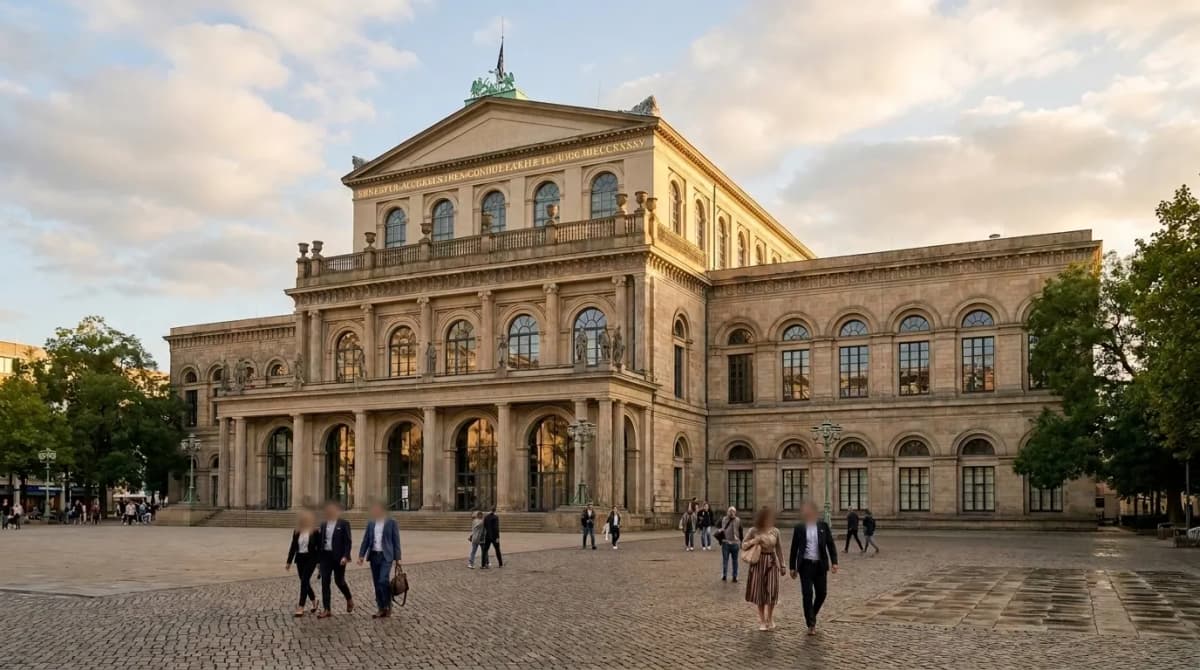
One of the largest opera houses in Germany and an architectural statement in its own right. The classicist building was designed in the mid-19th century by architect Georg Ludwig Friedrich Laves, destroyed in the war, and faithfully rebuilt. Even if you're not an opera fan, the square deserves a moment — especially in the evening, when the facade is beautifully lit. Grab a bench and take it in.
2. Aegidienkirche — A Roofless Memorial
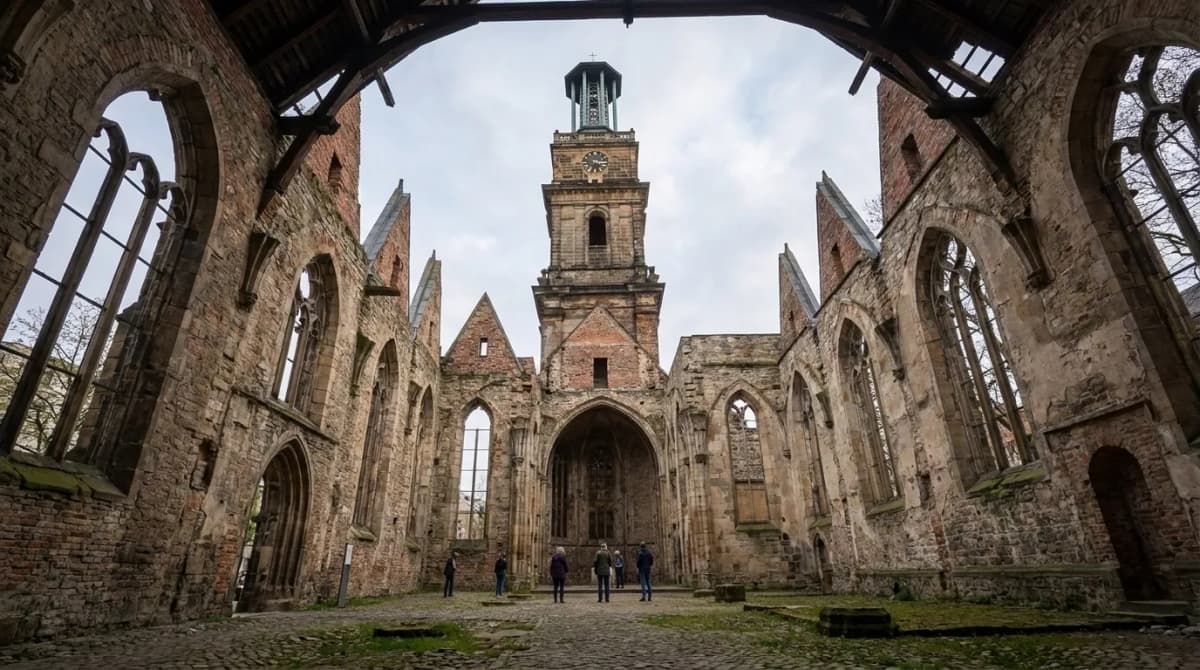
The ruins of Aegidienkirche are among the most moving stops on the entire route. Destroyed in World War II, the church was deliberately left in ruins as a memorial against war and violence — standing under the open sky in the middle of a modern city. The leaning tower makes for a striking photo. On the outer wall, you'll find the Siebenmännerstein, once one of Hannover's seven traditional landmarks. A place that makes you pause — whether you planned to or not.
3. New Town Hall — With a Curved Lift to the Dome
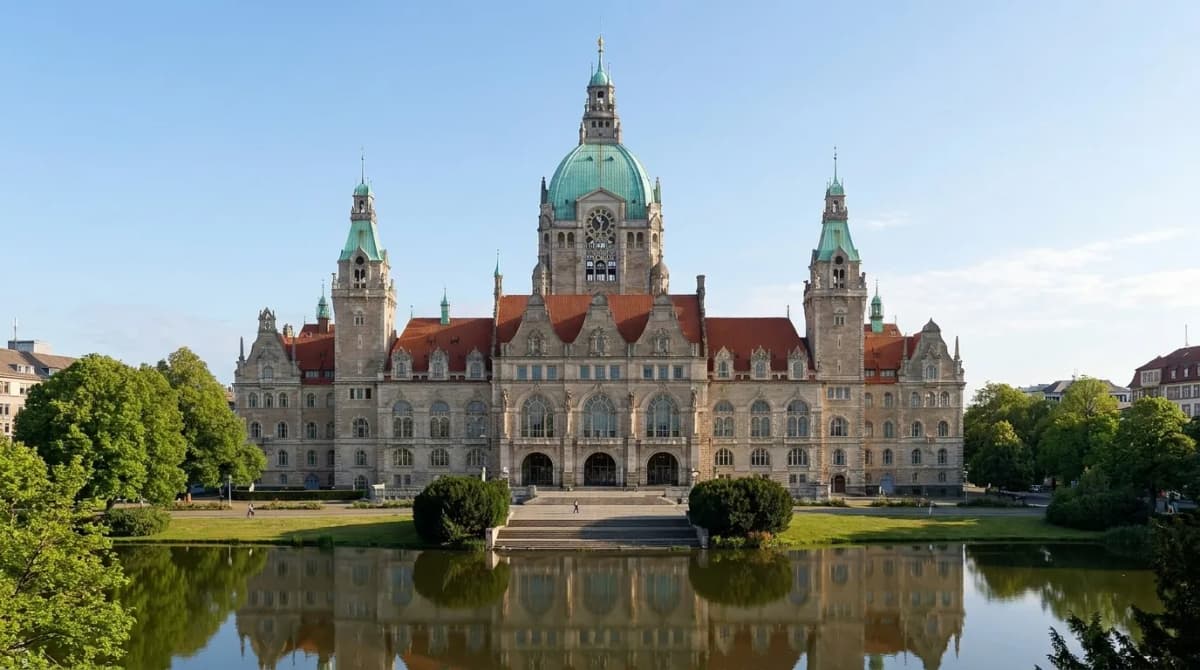
When a town hall looks like a palace, you know you're in Hannover. The New Town Hall was built between 1901 and 1913 and is as impressive inside as it is outside. In the entrance hall, four city models show Hannover at different periods — from the Middle Ages to today. Fascinating to see how much has changed.
The highlight: the inclined dome lift, which doesn't go straight up but follows the curve of the dome — unique in all of Europe. At the top, you get the best panoramic view of the entire city, Maschpark, and on a clear day, all the way to the Deister hills. Open April to October, entry just a few euros. First-time visitors: do not skip this.
4. Museum August Kestner
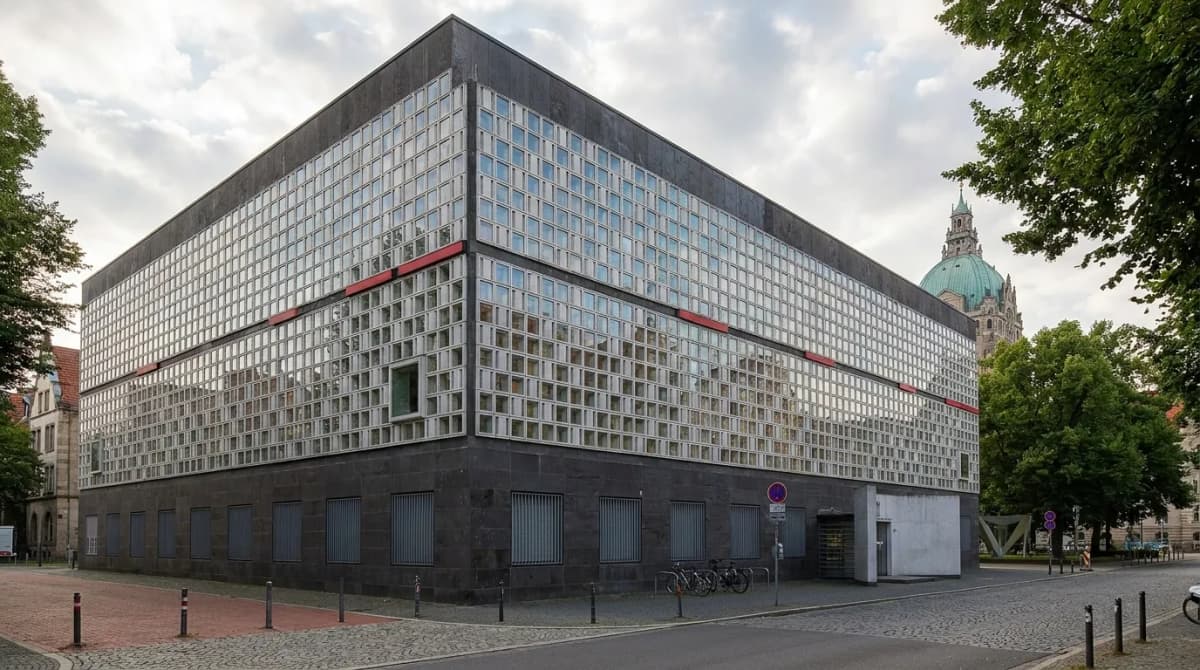
Right next to the Town Hall, this museum houses an impressive collection of ancient and applied art — from Egyptian artefacts to medieval craftsmanship. The modern facade with its 35,000 small glass panels is worth a look in itself. Art lovers can easily spend an hour here. Everyone else: admire the exterior and move on.
5. Leineschloss — Seat of the State Parliament
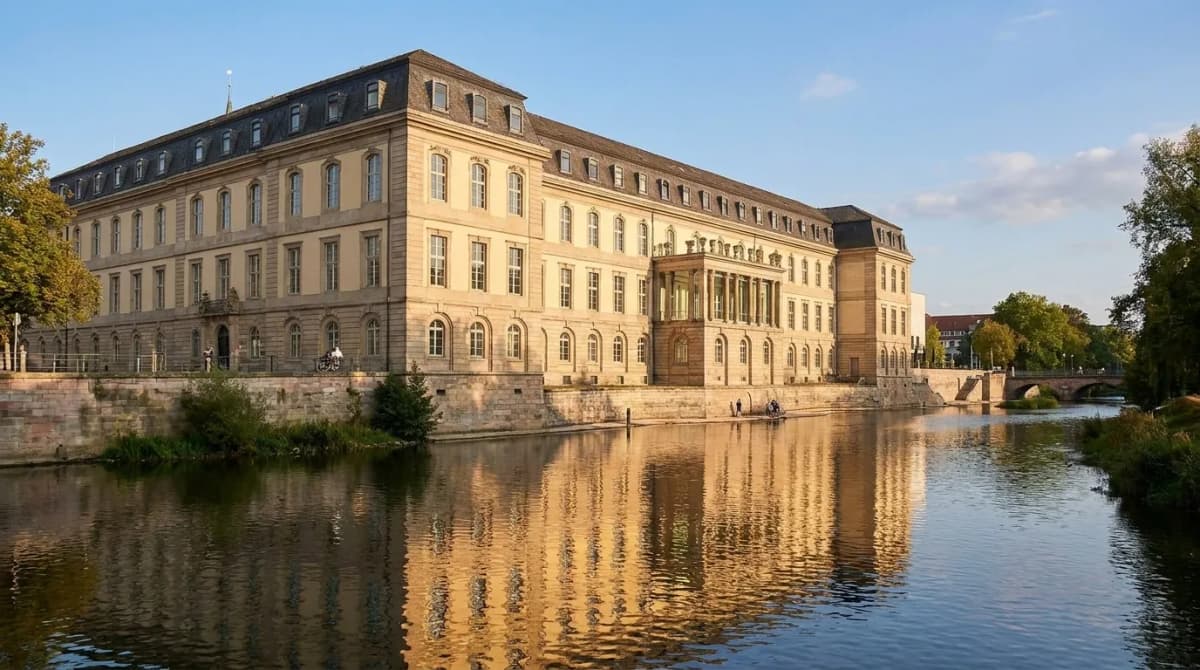
Overlooking the River Leine, this former royal residence now houses the Lower Saxony State Parliament. The view from the Schlossbrücke across the river to the historical facades is particularly rewarding. In sunshine, one of the most photogenic spots on the entire route.
6. Beginenturm — Am Hohen Ufer
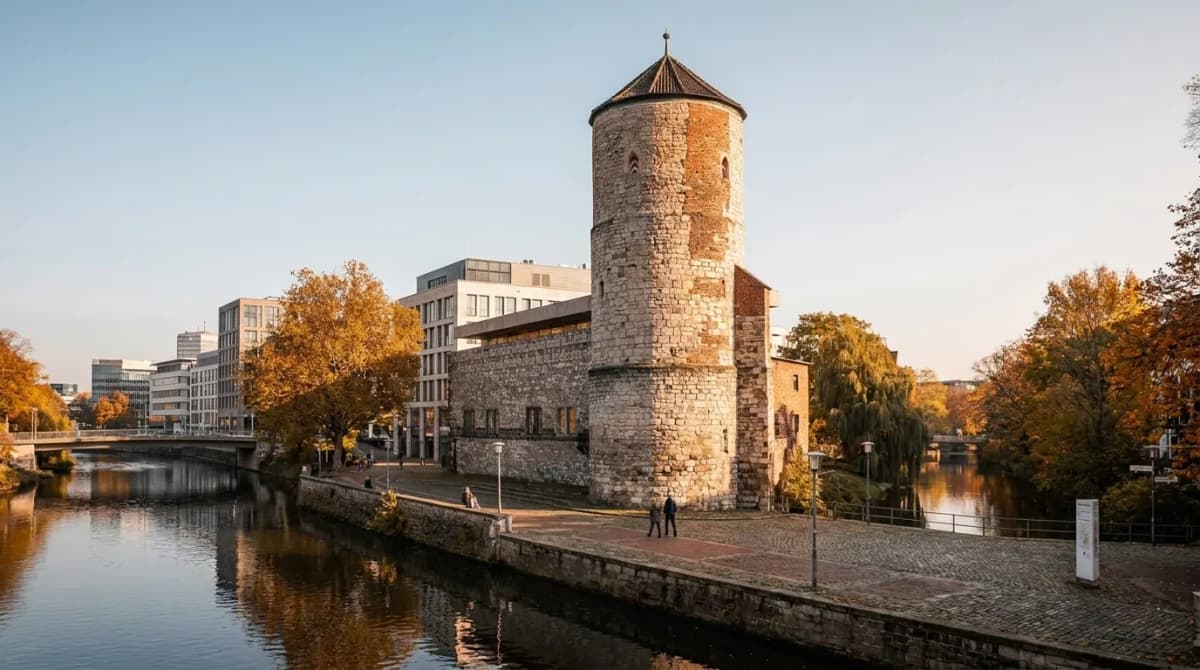
One of the last surviving defensive towers of the medieval city wall, right on the high bank of the Leine. Dating back to the 14th century, it's a tangible reminder of just how old Hannover really is. The contrast between the medieval brickwork and the modern Historical Museum right next door makes this spot particularly atmospheric.
7. Nanas by Niki de Saint Phalle
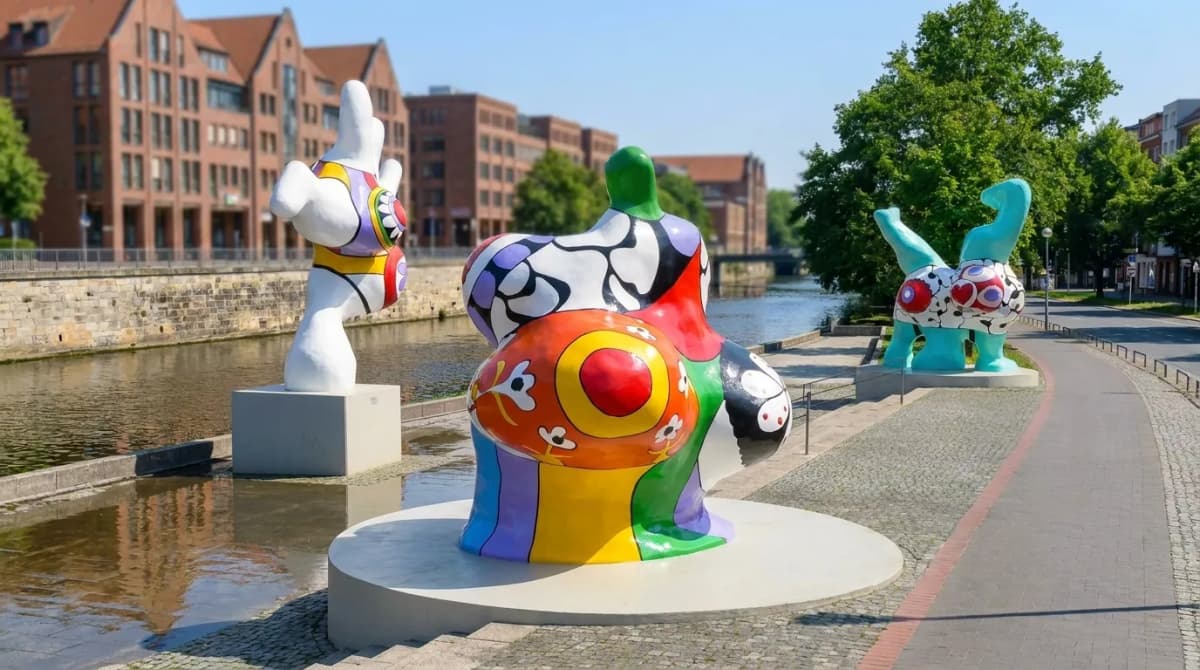
Three larger-than-life, brightly coloured female figures on the banks of the Leine — the Nanas are arguably Hannover's most recognisable artwork. French artist Niki de Saint Phalle created these oversized sculptures in the mid-1960s. When they were unveiled at the Leine riverbank in 1974, they caused a genuine scandal — today, they're the city's most photographed attraction. Our tip: stand next to them for a selfie that's guaranteed to start conversations.
8. Old Town and Marktkirche
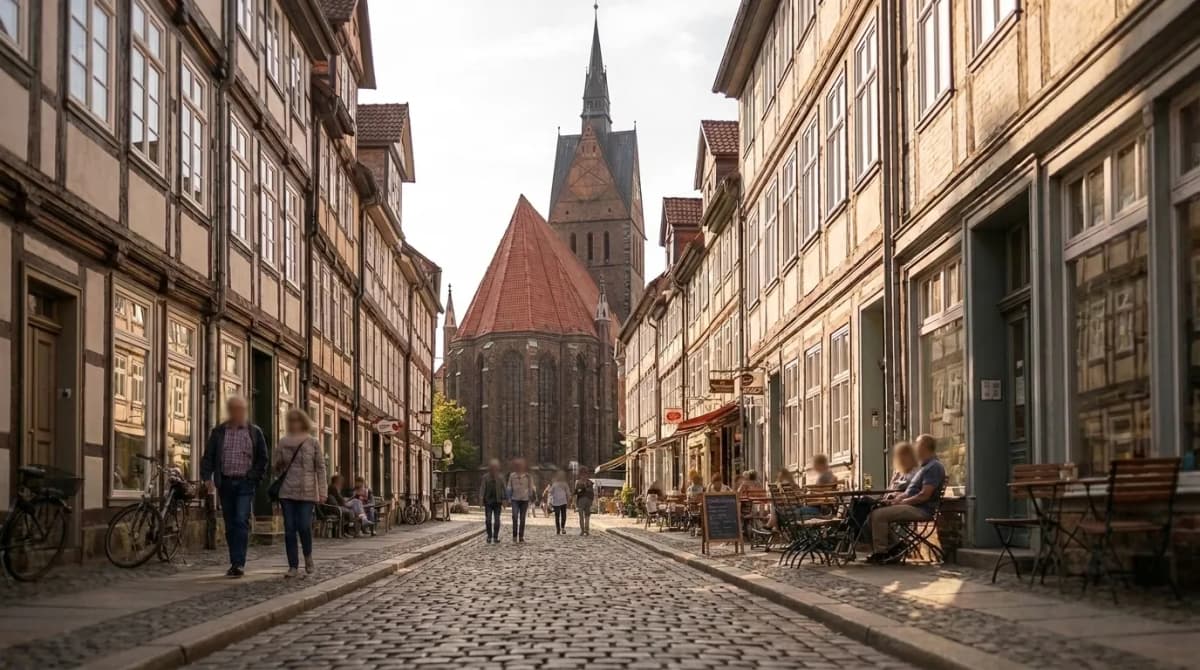
Through the Marstalltor gate, you enter the historic Old Town — and suddenly Hannover feels like a completely different city. Half-timbered houses from the 15th and 16th centuries, narrow lanes, cosy cafés in every corner. At the centre of it all stands the Marktkirche with its striking 97-metre tower, one of the city's icons. The Holzmarkt and Kramerstraße are Hannover's most charming corners — perfect for browsing, strolling and stopping for a drink.
9. Old Town Hall and Leibniz House
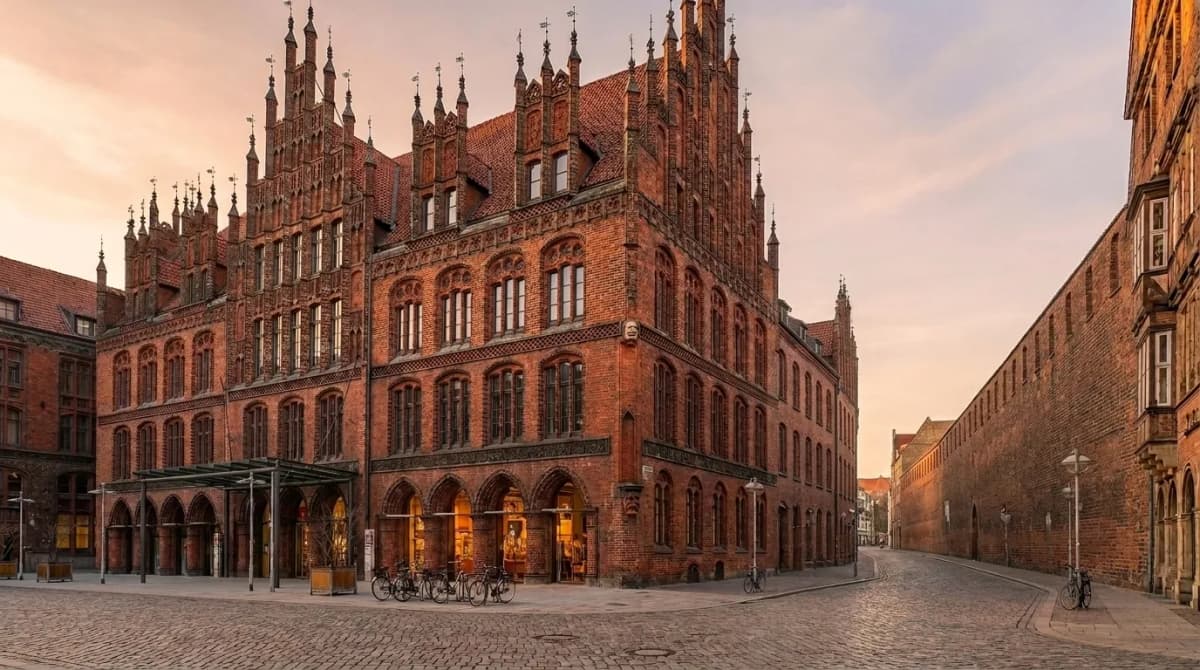
The Old Town Hall with its brick Gothic facade (15th century) is one of the oldest buildings in the city. On the outer wall, look for the Fratzenkopf — a grotesque face that has been grinning from the brickwork for centuries. Right next door stands the Leibniz House: the reconstructed home and workplace of the polymath Gottfried Wilhelm Leibniz, who revolutionised mathematics, philosophy, and quite a few things in between. Two buildings, two eras, one square — Hannover's history in the most compact form.
10. Kröpcke — The Heart of the City
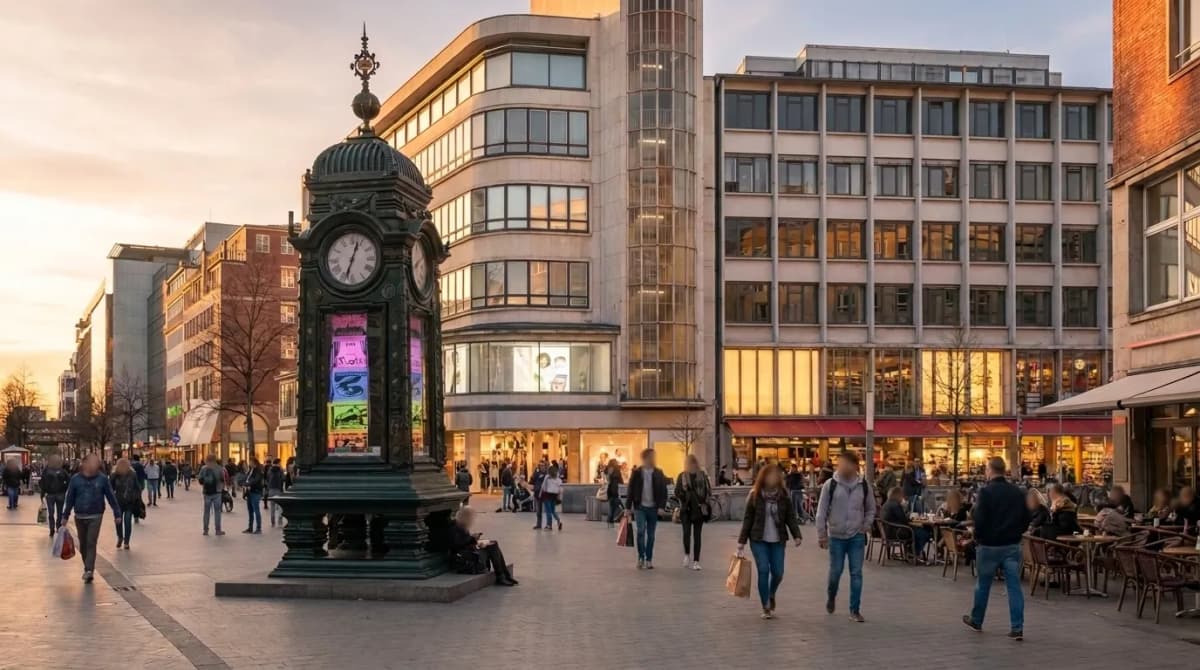
Kröpcke is Hannover's buzzing centre. Every major shopping street intersects here, the famous Kröpcke clock stands ready for meeting points, and the final stretch back to the station begins. Stop at Café Kröpcke for one last coffee and let the walk wind down. From here, it's just a few minutes to "under the tail" — the Ernst-August Monument, where the tour ends.
All 36 Stations at a Glance
For those who want to walk the complete Red Thread Hannover route, here's the full overview of all 36 stations — from the Tourist Information to the finish "under the tail." The route forms a loop: you start and end at the main railway station.
| No. | Station | Description |
|---|---|---|
| 1 | Ernst-August-Platz / Tourist Information | Starting point opposite the main station. Pick up the brochure here. |
| 2 | Galerie Luise | Upscale shopping arcade with a glass roof in the heart of the city. |
| 3 | Opera House | Classicist landmark, one of Germany's largest opera houses. |
| 4 | Georgstraße | Hannover's central shopping boulevard with department stores. |
| 5 | Georgsplatz | Lively square featuring the "Göttinger Sieben" sculpture. |
| 6 | Aegidientor | Former city gate — now a spacious square with a subway station below. |
| 7 | Aegidienkirche | War ruins preserved as a memorial against violence. Deeply moving. |
| 8 | Siebenmännerstein | Historic stone at Aegidienkirche, once one of Hannover's landmarks. |
| 9 | Volkshochschule | Adult education centre in a distinctive brick building. |
| 10 | Archer at Trammplatz | Bronze sculpture in front of the New Town Hall, overlooking Maschpark. |
| 11 | New Town Hall | Palace-like city hall with a unique curved dome lift. Must-visit. |
| 12 | Museum August Kestner | Ancient and applied art behind a facade of 35,000 glass panels. |
| 13 | Coat of Arms Portal | Ornamental portal on the Municipal Building Administration. |
| 14 | Laveshaus | Home and workplace of architect Georg Ludwig Friedrich Laves. |
| 15 | Wangenheim Palace | Classicist palace, now seat of the Ministry of Economic Affairs. |
| 16 | Waterloo Column | 46-metre victory column commemorating the Battle of Waterloo. |
| 17 | River Water Art on the Leine | Historic water art installation on the riverbank. |
| 18 | Schlossbrücke / Leineschloss | Bridge with views of the Lower Saxony State Parliament. |
| 19 | Am Hohen Ufer / Beginenturm | 14th-century medieval defensive tower on the banks of the Leine. |
| 20 | Nanas by Niki de Saint Phalle | Three colourful female sculptures — Hannover's most photographed art. |
| 21 | Marstalltor Gate | Historic gateway into the Old Town. |
| 22 | Hannover's Oldest Townhouse | The city's oldest surviving residential building (15th century). |
| 23 | Kreuzkirche | Gothic hall church in the heart of the Old Town. |
| 24 | Duve Chapel | Small 15th-century chapel adjoining Kreuzkirche. |
| 25 | Ballhof | Hannover's oldest sports hall, now a venue for the State Theatre. |
| 26 | Historical Museum | City history from the Middle Ages to today, with views of the Beginenturm. |
| 27 | Holzmarkt | Charming square in the Old Town with cafés and half-timbered houses. |
| 28 | Marktkirche | Oldest church in the Old Town with a 97-metre tower — city icon. |
| 29 | Old Town Hall | 15th-century brick Gothic building with the famous Fratzenkopf carving. |
| 30 | Kramerstraße / Half-timbered Houses | Picturesque row of timber-framed buildings with small shops. |
| 31 | Leibniz House | Reconstructed home of polymath Gottfried Wilhelm Leibniz. |
| 32 | Markthalle (Market Hall) | The "belly of Hannover" — gourmet food and street food under one roof. |
| 33 | Karmarschstraße | Shopping street connecting the Old Town to Kröpcke. |
| 34 | Kröpcke / Kröpcke Clock | The city's beating heart. Meeting point, shopping hub, café quarter. |
| 35 | Bahnhofstraße | Pedestrian boulevard from Kröpcke back to the main station. |
| 36 | Ernst-August Monument | Finish point "under the tail" — Hannover's most famous meeting spot. |
Practical Tips for the Walk
The Red Thread Hannover is refreshingly uncomplicated — no booking, no opening hours, no dress code. That said, a few things make the walk noticeably more enjoyable. Here are our top tips from first-hand experience:
How Much Time Do You Need?
At a brisk pace, you can cover the 4.2 kilometres in about 2 hours. But if you actually want to enjoy the stations — a photo here, a quick museum visit there, a slice of cake in between — plan for 3 to 5 hours. Our personal sweet spot: start in the morning, have lunch at the Markthalle, enjoy the Old Town in the afternoon. That turns the Red Thread into the perfect day out.
Best Time to Visit
Spring and autumn are ideal: comfortable temperatures, fewer tourists, and beautiful light for photographs. Summer can get warm on the open squares (Opernplatz, Trammplatz) — start early. Winter has its own appeal: from late November, the Old Town fills with Christmas market stalls, and the walk takes on an entirely different atmosphere.
The Red Thread Brochure
For about €3, the Tourist Information at Ernst-August-Platz sells the official companion brochure — pocket-sized, with a map, photos and background information on all 36 stations. Available in ten languages: German, English, French, Spanish, Italian, Polish, Russian, Turkish, Japanese and Chinese. Our recommendation: take one. The station numbers on the ground aren't always easy to spot.
Red Thread Hannover App
There is also a Red Thread app, but reviews are mixed. For a more modern digital alternative, try the hanno.guide app by the City of Hannover, which offers augmented reality features. But honestly: for this walk, the printed brochure works best.
Comfortable Shoes
The entire route runs along pedestrian paths and cobblestone streets. 4.2 kilometres sounds harmless but becomes an adventure with the wrong footwear. Flat, comfortable shoes are a must — cobblestones and heels don't mix. This goes double for the Old Town's charming but uneven stone lanes.
Where to Eat and Drink Along the Red Thread
One of the great advantages of this walk: it runs right through the heart of the city, past some excellent places to stop. Anyone walking the full route in a day should plan at least one break. Here are our picks, all directly on the route:
- Markthalle Hannover (Station 32) — Known as the "belly of Hannover" and the ideal lunch stop. Under one historic roof you'll find everything: fresh fish, Italian antipasti, Asian noodle soups, Turkish mezze. Not a sit-down restaurant, but a culinary market — stroll from stand to stand and taste your way through. It gets busy at lunchtime, but the atmosphere is worth it.
- Holländische Kakao-Stube (near Station 27, in the Old Town) — Handmade pralines, cakes and truffles since 1895. The hot chocolate is the stuff of local legend — rich, thick, and worth every calorie. The historic interior transports you to another era. Walking past without going in requires the self-discipline of a saint. Be sure to pick up a box of pralines as a souvenir.
- Café Kröpcke (Station 34) — The city's most famous café, right at Kröpcke square. An institution for over 100 years. Good for a quick espresso or a leisurely afternoon cake, watching the bustle of the city's busiest intersection before the final stretch to the station.
- Old Town Cafés around Holzmarkt (Station 27) — The Old Town is dotted with small cafés nestled in half-timbered houses. No chains, no franchises — everything here is individual. On a sunny day, sit outside, order a coffee, and watch the world go by through the narrow lanes. Hannover at its most picturesque.
- Colosseum at the Main Station (after Station 36) — Finished the walk and want a reward? The Colosseum right at the main station is famous across Hannover for its ice cream. The perfect finish after 4.2 kilometres on foot.
Red Thread with Children: How to Turn the Walk into a Family Adventure
The route works brilliantly for families — as long as you plan it around the children's attention span rather than trying to tick off all 36 stations. With a few adjustments, the Red Thread becomes a genuine highlight for all ages.
The entire route is fully barrier-free — which means it's perfectly manageable with a pushchair or buggy. For smaller children (ages 3–6), the red line on the ground quickly becomes a game: "Don't step off the line!" guarantees entertainment for at least the first 500 metres.
Best Stations for Children
The Nanas (Station 20) — colourful, enormous, and absolutely fascinating for children. Photo stop guaranteed. The curved dome lift in the New Town Hall (Station 11) — a lift that travels along a curve. What child wouldn't find that exciting? And the Old Town (Stations 21–31) with its narrow lanes and half-timbered houses — like stepping back into the Middle Ages.
Digital Treasure Hunt for Older Children
For families with children aged 8 and up, the Actionbound app turns the walk into a digital treasure hunt along the Red Thread route, complete with quiz questions and challenges. The bound is free and transforms the walk into an adventure.
Realistic Schedule for Families
Trying to cover all 36 stations with children? Not a great idea. 10–15 stations is plenty for a relaxed family outing (about 2 hours). Our suggestion: walk from the main station to the Old Town (Stations 1–22), take a café break, and then decide if there's energy left. Save the rest for the next visit. Visiting Hannover with children doesn't have to be exhausting — it just needs a bit of planning.
More Attractions Near the Red Thread
The Red Thread covers the city centre superbly — but Hannover has more to offer. If you're staying an extra day or still have energy after the walk, we recommend:
- Herrenhäuser Gärten — Hannover's answer to Versailles. The baroque Great Garden is one of the most significant garden complexes in Europe. The Berggarten with its tropical greenhouses is equally worth a visit. Reachable by tram (Lines 4/5), admission around €8. For garden enthusiasts, an absolute must — and reason enough on its own to visit Hannover.
- Maschsee — Hannover's "lake in the city." This man-made lake lies just a few minutes' walk from the New Town Hall and offers walking paths, cycling, and pedal boat hire. In summer, the Maschseefest takes place here — one of Germany's largest lake festivals. Tip: the north shore at sunset, with views across the water toward the Town Hall, is spectacular.
- Hannover Adventure Zoo — One of Germany's most popular zoos, especially for families. The themed worlds (Sambesi, Yukon Bay, Jungle Palace) make it a full-day excursion. Easily accessible by tram.
- Eilenriede — One of the largest urban forests in Europe, right next to the city centre. Perfect for jogging, walking, or simply unwinding after a day full of sightseeing.
More Walking Tours in Hannover
If the Red Thread has left you wanting more, Hannover has several other routes worth exploring:
- Blue Thread (Blauer Faden) — An extension of the Red Thread through the Calenberger Neustadt. Less touristy, with highlights including the grave of Leibniz in the Neustädter Church, the Waterloo Column, and the Jewish Memorial on Ohestraße.
- Leibniz Trail — For anyone interested in the polymath Gottfried Wilhelm Leibniz: a dedicated route traces the places he lived and worked in Hannover — from the library to his residence.
- Graffiti Tour — Hannover has a surprisingly vibrant street art scene. Guided tours through the most colourful districts — especially Linden and the Nordstadt — reveal a completely different side of the city. The perfect follow-up for anyone who wants something modern after the historical Red Thread.
- hanno.guide App — The city's free SmartCity app offers several digital walking tours with augmented reality features and GPS navigation. Ideal for visitors who like exploring with their smartphone in hand.
Getting to Hannover
Hannover is superbly connected: a major ICE rail hub, a motorway junction, and an efficient local transport network make getting here straightforward — whether you're coming from Hamburg, Berlin, or Frankfurt.
By Train
Hannover Hauptbahnhof is a major ICE hub, well connected from all directions. From Hamburg, Berlin, Frankfurt or Cologne, the journey takes between 1.5 and 3 hours. From the station to the Red Thread starting point: exactly 2 minutes on foot. A city walk couldn't begin more conveniently.
By Car
Hannover sits at the A2/A7 motorway junction and is easily accessible from across Germany. City centre parking: the Raschplatz car park (right next to the main station) or the Aegidientorplatz underground garage are both ideally located for the start of the Red Thread. Day tickets range from €8 to €15 depending on the car park.
By Public Transport
Hannover's tram network (Üstra) connects almost anywhere in the city to Kröpcke or the main station — both directly on the Red Thread. Single tickets from €2.80, day passes from €6.50. For the Herrenhäuser Gärten: take Line 4 or 5 to Herrenhäuser Gärten.
Final Thoughts: Why the Red Thread Is the Best Way to Start Exploring Hannover
4.2 kilometres, 36 stations, one red line on the pavement — and yet every walk is different. The Red Thread Hannover isn't a rigid tourism programme, but an invitation to discover the city at your own pace. You can walk it in two hours or take a whole day. You can linger at the Markthalle, ride the curved dome lift in the New Town Hall three times, or simply sit in the Old Town and watch the world go by.
What sets the Red Thread apart from other city tours is that it works without preparation, without booking and without a guide — but still delivers a complete overview of everything Hannover has to offer. From the Opera House to the Nanas, from grand town halls to narrow half-timbered lanes.
If you're staying more than a day, the next morning you can visit the Herrenhäuser Gärten, walk along the Maschsee, or follow the Blue Thread as a continuation. And for exactly that, it's worth having accommodation that offers more than a hotel room: the be Apart Serviced Apartments come with a fully equipped kitchen for breakfast, a washing machine for travel laundry, and enough space to truly stretch out after a long day of walking — a real advantage, especially for families.
So: comfortable shoes on, brochure in your pocket, and follow the red thread. Hannover is waiting.
Frequently Asked Questions About the Red Thread
Yes, the walk itself is completely free. The companion brochure costs around €3 but isn't required.
About 2 hours at a quick pace, 3–5 hours with stops and sightseeing. If you visit the dome lift in the Town Hall and eat at the Markthalle, plan for 4–5 hours.
At Ernst-August-Platz, at the Tourist Information opposite the main railway station. You can also join at any point along the route — it forms a loop.
Yes, the entire route is fully barrier-free and suitable for wheelchairs, pushchairs and walkers.
Yes, the companion brochure is available in ten languages, including English, French, Spanish, Japanese and Chinese.
No — large sections of the route run through pedestrian zones where cycling is not permitted. The route is designed as a walking tour.
Yes. Starting from the New Town Hall, a roughly 45-minute detour leads to Lake Maschsee — ideal if you still have energy after the main walk and want to enjoy the lakeside atmosphere.
Every spring. In March/April, the red line is at its freshest and most vibrant.